
In quick service restaurants, the cash routine doesn’t get easier just because card payments are up. When you’re running busy shifts, coping with labor pressure and training gaps, and dealing with coin-heavy cash drawers, the need to reduce closeout time often comes down to how quickly you can count and reconcile cash without rework.
Golden State Restaurant Group is a family-run McDonald’s operator with 45 restaurants across multiple counties in California. The team had already made progress speeding up deposit preparation, but the cash drawer count remained a bottleneck. With drawers overflowing with coins, cash counting was being done manually and could take up to 30 minutes at a time – creating pressure at shift change and increasing the chances of mistakes and recounts.
At a glance: 45 restaurants | manual cash drawer counting up to 30 minutes | reduced to around 60 seconds
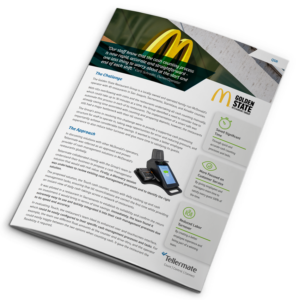
The aim wasn’t just “faster counting.” The business wanted a more supportive structure for teams working under real in-restaurant conditions: a routine that reduces opportunities for error, takes pressure out of start- and end-of-shift closeout, and frees managers up from extended back-office tasks.
Following a review of existing cash management processes, the Group introduced the Tellermate Touch cash counter to support daily cash closeout and drawer reconciliation. The solution was piloted in one restaurant first to confirm it fit the reality of the operation and delivered a return in time saved, then rolled out more widely once it proved workable in practice.
Rollout matters as much as the device. Forty-five Touch cash counters and Bluetooth printers were distributed from head office to each site, supported by a train-the-trainer approach with the Group’s Director of Operations to embed consistent use and agreed routines across the estate. In-store, the cash counter was located in the back office/cash office alongside the safe – a practical decision that supports both convenience and security, and reflects how most restaurants prefer to keep cash processing controlled and contained.
The operational outcome was a meaningful reduction in the time and friction associated with cash drawer counts. With Touch in place, the Group reports that coin-heavy drawers can now be counted in around 60 seconds instead of 30 minutes, helping reduce stress at the start and end of shifts and improving focus on the customer and employee experience.
“Our restaurant staff are incredibly happy with the introduction of Touch into our cash management processes… The Touch saves time and reduces anxiety related to cash counting responsibilities.” – Carli S., Owner/Operator, Golden State Restaurant Group
Read the full case study (PDF) to see how the pilot, rollout approach and in-restaurant routines were structured across 45 locations:

How long did cash drawer counting take before?
In this estate, manual cash drawer counting could take up to 30 minutes when drawers were heavy with coins and counting was done by hand.
What did they reduce cash drawer counting to?
After implementation, drawers could be counted in around 60 seconds, rather than up to 30 minutes.
Why does cash drawer counting become a bottleneck in QSR?
It tends to hit at the worst times — start/end of shift, end of day, or when teams are already stretched. Manual counting also increases rework: recounts, questions, and reconciliation delays that pull managers into the back office.
What made the rollout work across 45 sites?
The case study highlights three practical enablers: a pilot to prove fit and value, distribution of counters and printers from head office, and a train-the-trainer rollout that reinforces consistent routines rather than relying on ad hoc learning.
Where was the cash counter used in the restaurant?
Cash was counted in the restaurant back office/cash office, with the device placed alongside the safe for convenience and security.


